
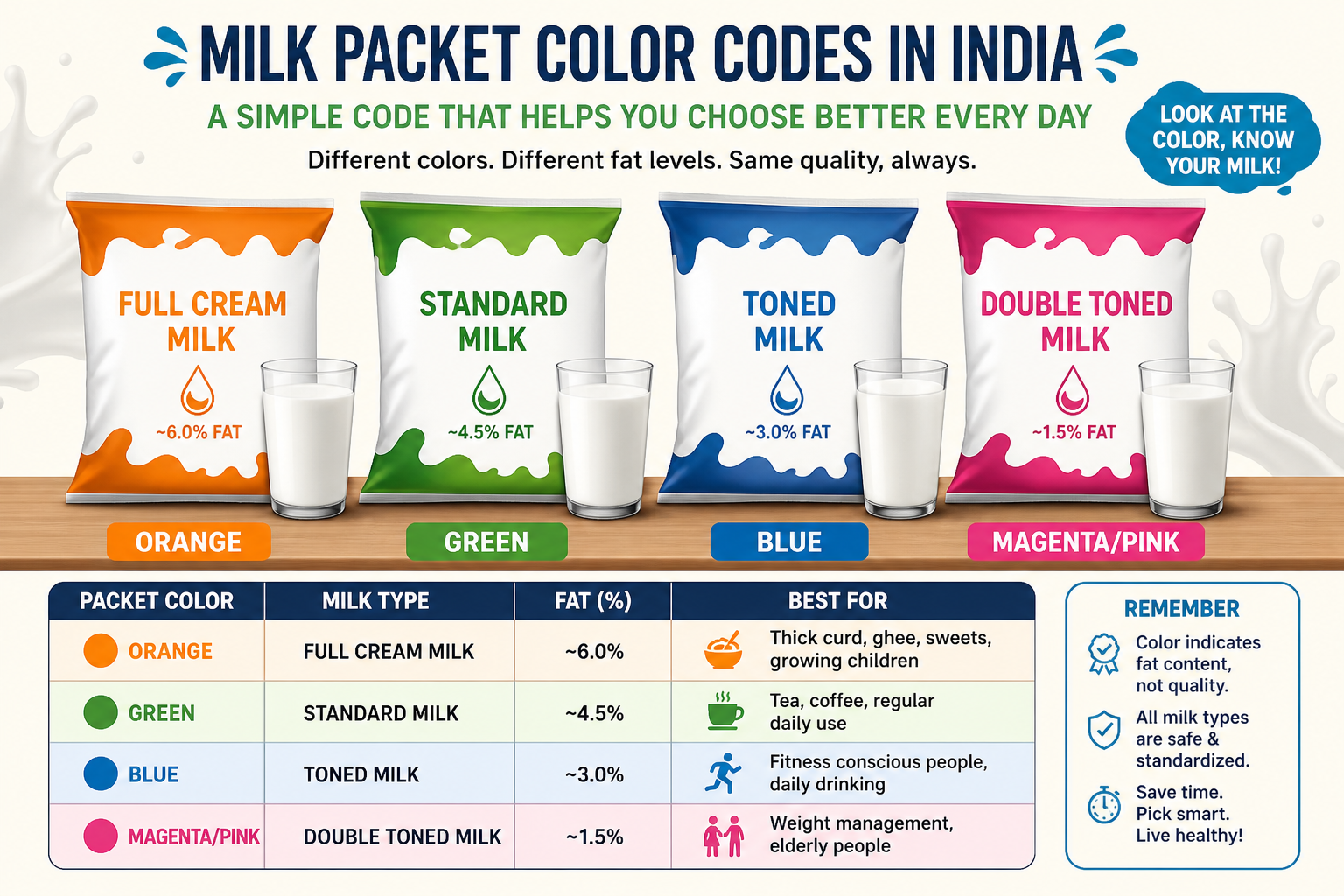
In India, mornings often begin with the familiar sound of a milk packet being delivered at the doorstep. Sitting quietly in our refrigerators, these packets—marked with blue, green, orange, or even pink colors—are not just designed for visual appeal. They are part of a clever “coded language” used by the dairy industry to instantly communicate what’s inside—without needing to read the label.
Let’s decode this everyday mystery and understand which milk is right for your kitchen.
The Color Logic: A Visual Shortcut to Fat Content
While food safety regulations ensure proper labeling, dairy brands use color coding as a quick and easy way to help consumers identify milk types based on fat content. It simplifies decision-making—especially during busy mornings.
Here’s the commonly followed color system in India:
🟠 Orange – Full Cream Milk
- Fat Content: ~6.0%
- Best For: Making ghee, thick curd, sweets, and for growing children
- Texture: Rich, thick, and creamy
This is the most indulgent option, ideal when taste and richness matter the most.
🟢 Green – Standard Milk
- Fat Content: ~4.5%
- Best For: Tea, coffee, and regular household use
- Texture: Balanced—neither too thick nor too light
A perfect middle ground for everyday consumption.
🔵 Blue – Toned Milk
- Fat Content: ~3.0%
- Best For: Daily drinking, fitness-conscious individuals
- Texture: Light yet retains natural taste
This is one of the most popular choices across urban households.
🌸 Magenta/Pink – Double Toned Milk
- Fat Content: ~1.5%
- Best For: Weight management, elderly people
- Texture: Very light and easy to digest
Ideal for those looking to reduce calorie intake without giving up milk.
Why These Colors Matter
Most of us buy milk on “autopilot.” There’s rarely time to flip the packet and read nutritional details during the morning rush. That’s where color coding works like a “speed dial”—you simply recognize your preferred color and move on.
Clearing a Common Myth
A widespread misconception is that orange (full cream) milk is “better” or “more pure” than blue or pink variants. In reality, all milk types meet the same quality standards. The only difference lies in fat content, not purity.
- Want richness and flavor? Go for orange.
- Prefer a balanced option? Choose green.
- Watching calories? Blue or pink is your best bet.
A Part of Everyday Language
Interestingly, these colors have become part of our daily conversations. We often say things like, “Get the blue packet today” or “Buy the orange one for sweets.” It’s a simple system that doesn’t require technical knowledge—just habit and familiarity, passed down through generations.
Quick Reference Table
| Packet Color | Milk Type | Fat % | Best For |
|---|---|---|---|
| 🟠 Orange | Full Cream | ~6.0% | Sweets, ghee, children |
| 🟢 Green | Standard | ~4.5% | Tea, coffee, daily use |
| 🔵 Blue | Toned | ~3.0% | Fitness & regular drinking |
| 🌸 Magenta | Double Toned | ~1.5% | Weight loss & elderly |
Final Thought
The next time you reach for a milk packet, take a second to notice its color. That small detail carries meaningful information about your nutrition and lifestyle choices.
Simple, smart, and silently guiding millions of households every day—this color code is truly one of India’s most underrated daily-life hacks.